

1:1 prep and recording
Load manager conversations with context and keep action items tied to follow-through.
Use case
This page is for the leader who is tired of assembling Friday updates from half a dozen tools. Forgemaster turns the review into one repeatable decision-making loop.
Best cadence
Weekly
best used as a fixed review rhythm rather than an occasional report
Primary audience
CTO + managers
shared review surface for leadership and team leads
Primary outcome
Fewer blind spots
less scrambling for updates and more time on real decisions

Problem framing
Most weekly reviews fail because the team spends the first half collecting facts instead of acting on them.
Metrics live in one place, incidents in another, and contributor context in someone’s memory.
Leaders walk into the review with different versions of what happened and why it matters.
Even when the review is useful, the follow-through often breaks outside the meeting itself.
What Forgemaster surfaces
It gives the meeting a practical operating baseline instead of another slide deck.
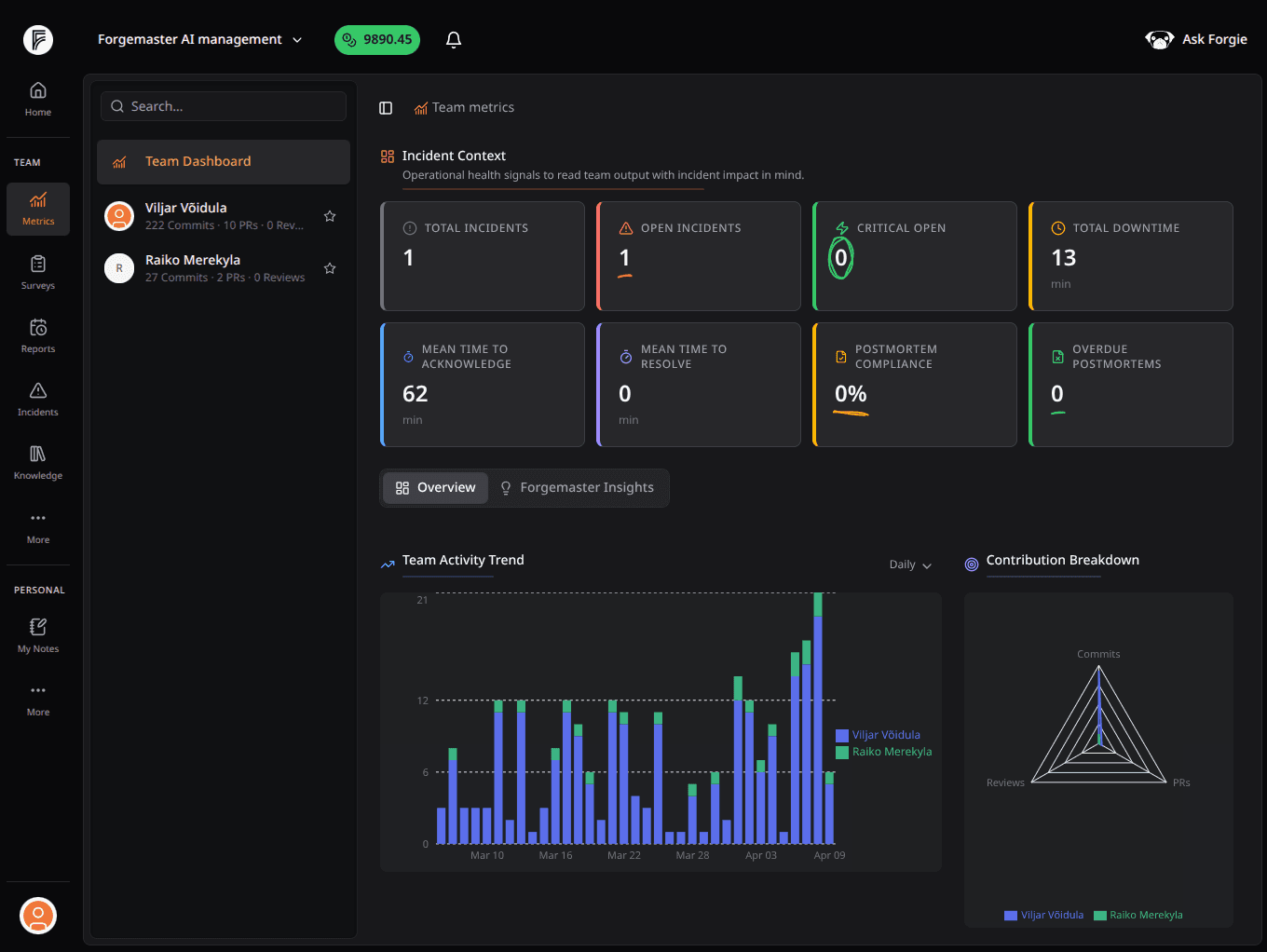
See cycle time, review flow, and contribution patterns that explain whether the team actually moved this week.
Add incident load, downtime, and response context so weekly output is read with real operating conditions attached.
Use contributor and manager context to see when the delivery pattern points to overload, concentration, or coaching follow-up.
How the cadence runs
The value comes from making the weekly loop predictable.
Open the dashboard after the week’s data has landed so the team starts from the current operating picture.
The facts are assembled before the meeting.
Work through delivery movement, incident pressure, and contribution context together instead of collecting updates live.
The meeting produces decisions instead of recap.
Move contributor-specific signals into manager prep, ownership work, or executive reporting instead of letting them disappear.
The weekly review changes actual behavior.
Screen spotlight
It is designed to answer the first question in the room: what happened this week that actually matters?
What changes
That matters because leadership quality is mostly about what happens after the signal appears.
The team can decide what to fix, defer, or escalate without first debating what happened.
Ownership gaps, review drag, or people strain surface while there is still time to respond.
The weekly review produces concrete threads to carry into 1:1 prep and coaching work.
Go deeper
Start from the meeting, then branch into the feature or adjacent use case that explains the signal.
Break down the signal
02Load manager conversations with context and keep action items tied to follow-through.
Leadership reporting
When leadership updates feel vague, use team and repo signals to explain what changed and what needs support.
Outcome
Deliver engineering updates that hold up to follow-up questions.
Carry it into action
02Ownership continuity
When critical systems depend on too few people, use repo ownership and depth data to strengthen coverage early.
Outcome
Know which critical systems need healthier shared coverage.
People strain
When overload or burnout shows up too late, use work-pattern and retention signals to surface strain earlier.
Outcome
Spot burnout and overload 4–6 weeks before it becomes attrition.
Start with the team metrics dashboard, then wire the review rhythm into the manager and executive workflows around it.