

1:1 prep and recording
Load manager conversations with context and keep action items tied to follow-through.
Workflow
This page is for the operator who wants the product to become part of a real weekly engineering system, not just another dashboard tab.
Primary job
Operating rhythm
this workflow turns the dashboard into a living weekly system
Best cadence
Weekly
most useful when it is run consistently, not only during crises
Decision type
What changed and what to do next
the weekly review is the bridge between signal and action

What it solves
This workflow explains how to turn the product into a repeatable weekly habit that actually changes leadership behavior.
Without a fixed rhythm, the team spends the meeting reconstructing the week instead of making decisions.
Even when a risk is spotted, leaders often do not know which adjacent workflow should pick it up next.
The review feels useful in the room but does not reliably reshape manager or leadership action afterward.
What the workflow covers
That is what makes the weekly review useful beyond the meeting itself.
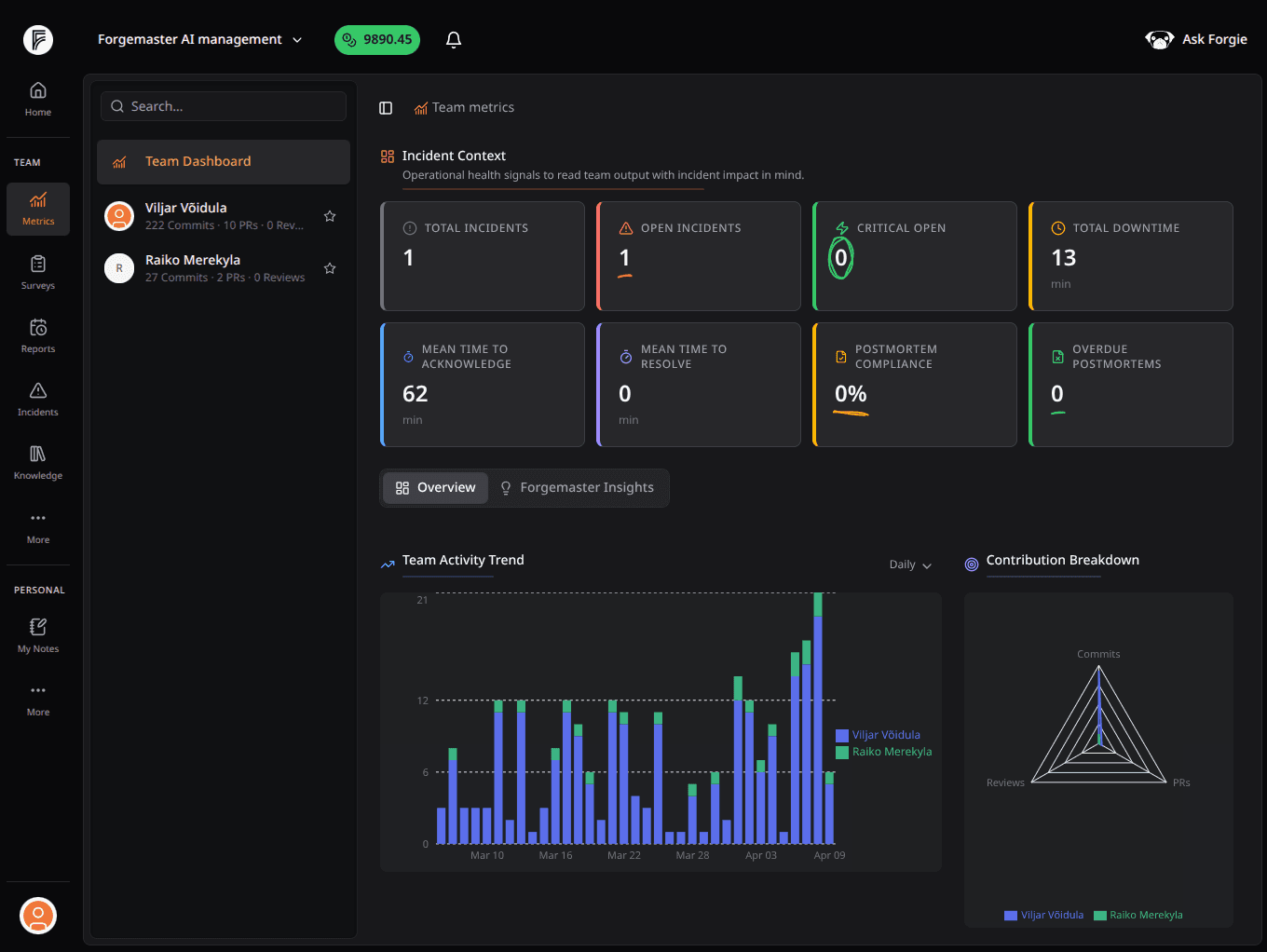
Open the dashboard and trend surfaces that frame the week before the meeting begins.
Work through movement, pressure, and anomaly rather than collecting general updates.
Use related contributor, health, and ownership pages when the weekly signal needs a second layer of interpretation.
How the cadence runs
Keep the weekly loop simple enough to sustain and specific enough to matter.
Review the dashboard before the meeting so the operator already knows what changed and where the anomalies sit.
The room starts with current context.
Use the baseline to discuss what happened, what matters, and whether the signal needs people or repo follow-through next.
The meeting produces action instead of recap.
Move the relevant threads into manager prep, health review, or ownership work while the context is still fresh.
The weekly review changes the next week too.
Workflow output
That is why the workflow is about cadence and branching as much as the screen itself.
What changes
That improves both leadership discipline and the quality of downstream action.
The team knows what the review is for and how it should move from signal to decision.
Signals move into prep and follow-through more naturally because the workflow expects that branch.
Week-to-week review becomes a better place to spot patterns, not just isolated incidents.
Go deeper
They help you route the signal into executive, people, or ownership follow-up.
Carry it into other rituals
02Load manager conversations with context and keep action items tied to follow-through.
Leadership reporting
When leadership updates feel vague, use team and repo signals to explain what changed and what needs support.
Outcome
Deliver engineering updates that hold up to follow-up questions.
Diagnose the deeper issue
02People strain
When overload or burnout shows up too late, use work-pattern and retention signals to surface strain earlier.
Outcome
Spot burnout and overload 4–6 weeks before it becomes attrition.
Ownership continuity
When critical systems depend on too few people, use repo ownership and depth data to strengthen coverage early.
Outcome
Know which critical systems need healthier shared coverage.
Use the dashboard as the shared baseline, then run the weekly rhythm until the team stops having to reinvent the meeting.