

Manager action
Contributor profiles
When a team signal points to one person, use workload, impact, and ownership context to coach earlier.
Workflow
This page is for the manager who wants a repeatable way to turn product signals into better 1:1 conversations and visible follow-through.
Primary job
Manager follow-through
the workflow turns people signal into a repeatable manager rhythm
Best cadence
Weekly or biweekly
built for teams that run regular contributor check-ins
Decision type
What to discuss and what to track
helps managers separate signal from noise before the conversation starts

What it solves
This page shows how to carry the signal from profile and team views into a repeatable 1:1 operating rhythm.
Managers often reconstruct context from memory, recent incidents, and scattered notes instead of one coherent signal trail.
Even useful conversations lose force if their outcomes are not visible in the next check-in or weekly review.
Without a workflow, it is hard to see whether a contributor is improving, stuck, or carrying a recurring form of strain.
What the workflow covers
That makes it useful for both immediate conversations and longer-running support work.
Use contributor and health signals to decide what deserves time in the next 1:1.
Anchor the discussion in recent pattern change instead of generic performance talk.
Keep outcomes visible so the next conversation starts from what actually happened afterward.
How the cadence runs
The point is to make manager support work cumulative rather than episodic.
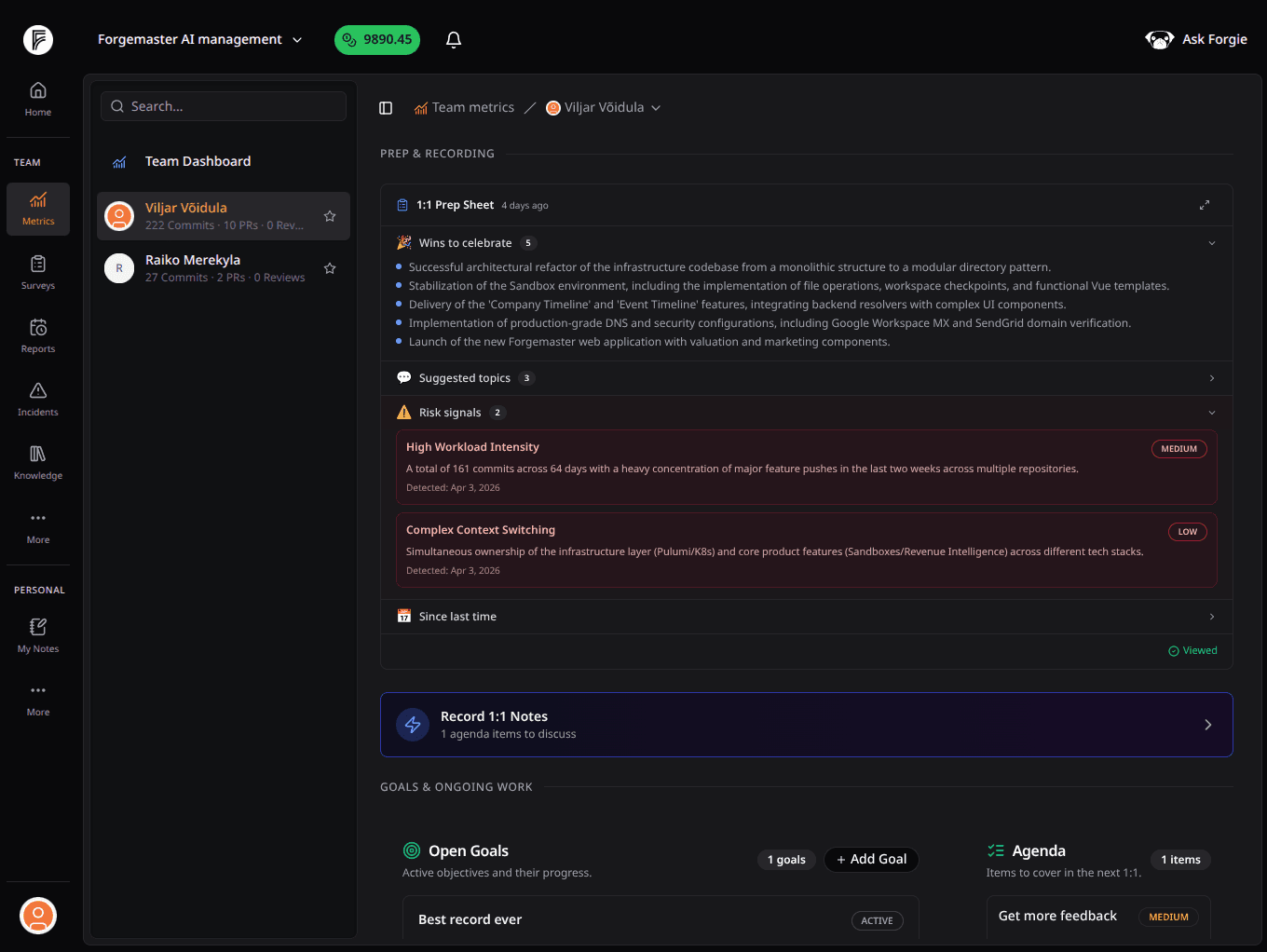
Use the prep view to decide what changed and which discussion topic actually deserves time this week.
The manager is prepared with specific context.
Use the prep context to discuss workload, support, growth, or ownership with clearer evidence in hand.
The conversation is more concrete and fair.
Keep the action visible so it can show up again in the next prep cycle or weekly review loop.
Manager follow-through becomes trackable.
Workflow output
That is what turns a good 1:1 into better longitudinal support work.
What changes
That improves conversation quality and the odds that the team actually sees the benefit afterward.
The 1:1 starts from the week that actually happened instead of vague recollection or intuition.
Outcomes and next steps stay visible enough to revisit, not just enough to feel good in the moment.
Manager action, contributor context, and weekly review signals start reinforcing each other across the system.
Go deeper
They help you see where the manager conversation should connect back into broader operating work.
Source the context
02Manager action
When a team signal points to one person, use workload, impact, and ownership context to coach earlier.
People strain
When overload or burnout shows up too late, use work-pattern and retention signals to surface strain earlier.
Outcome
Spot burnout and overload 4–6 weeks before it becomes attrition.
Loop it back into operations
02Weekly review pain
When leadership spends the meeting reconstructing the week, use one shared baseline for delivery, incidents, and risk.
Outcome
Review prep drops from 90 minutes to under 20.
People strain
When overload or burnout shows up too late, use work-pattern and retention signals to surface strain earlier.
Outcome
Spot burnout and overload 4–6 weeks before it becomes attrition.
Start from contributor and health signal, then use prep and recording to make support work visible from week to week.