

Weekly review pain
Weekly engineering review
When leadership spends the meeting reconstructing the week, use one shared baseline for delivery, incidents, and risk.
Outcome
Review prep drops from 90 minutes to under 20.
Feature for murky weekly reviews
Forgemaster pulls delivery flow, incident context, and contribution movement into one shared baseline so leadership can see what changed before debating whose report is right.
Core pain
Conflicting updates
leaders and managers arrive with different versions of the week
Tool job
Shared baseline
the dashboard combines delivery, incidents, and contribution movement in one view
Decision unlocked
Where to dig next
it shows whether the next question sits with people, repos, or operating load
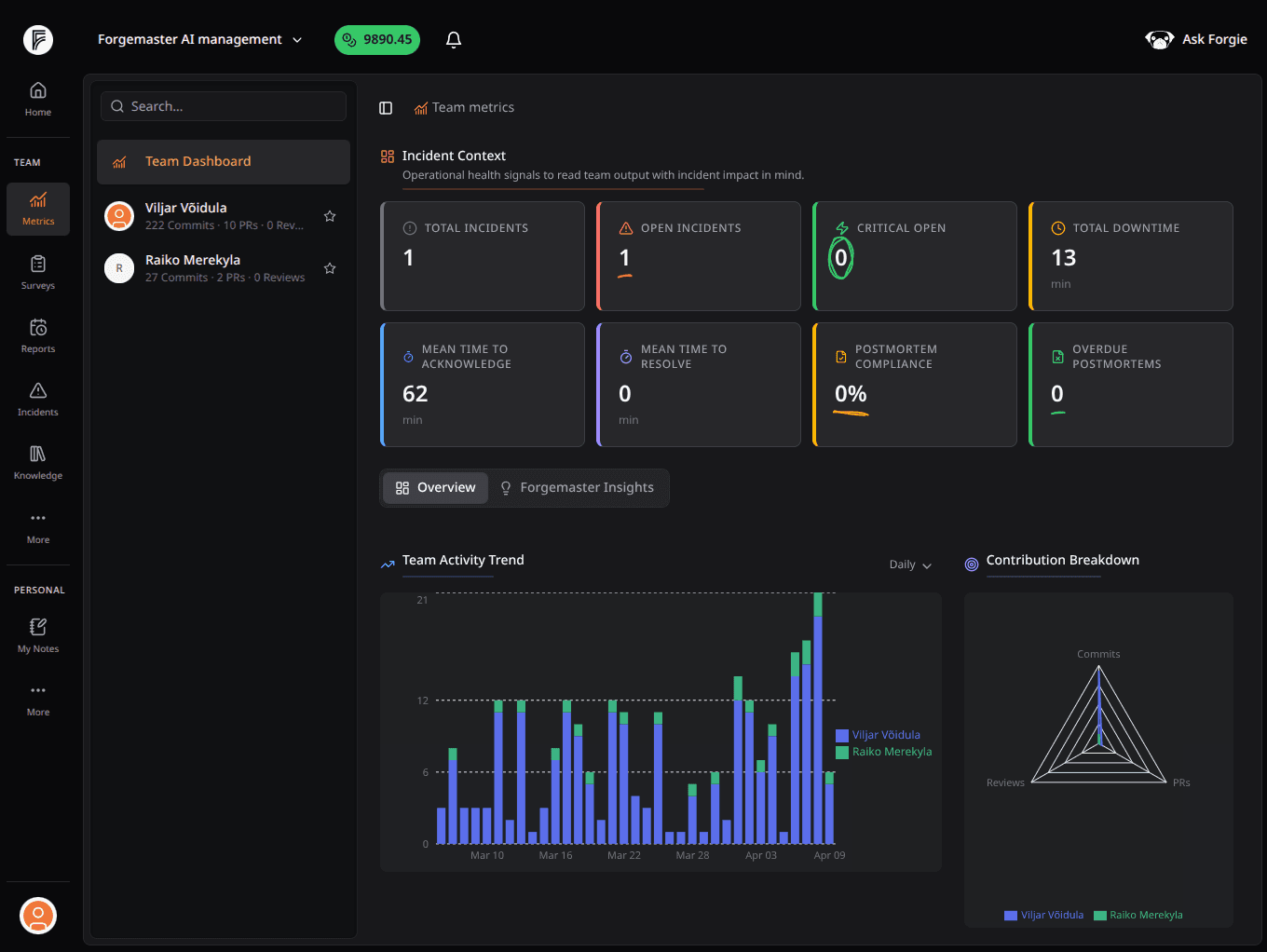

See it in action
The weekly dashboard surfaces the signal, the drill-down shows the pattern, and the prep is loaded before the meeting starts.
Deploy freq
4.2/day
Cycle time
38h
Incidents
0.3/d
PR latency
22h
Pain point
The dashboard exists to collapse scattered updates into one baseline and a faster path to action.
Delivery lives in one tool, incidents in another, and contributor context in whoever happened to prepare.
A good or bad week is misread when downtime, incident pressure, or review bottlenecks are invisible.
Even when something looks off, teams waste time deciding whether the problem is people, repos, or broader operating load.
What changes
That matters because the value is not the dashboard itself. It is the better decisions that follow from it.
The meeting spends less time collecting updates and more time deciding what matters.
Leaders can see sooner whether the issue is people strain, repo health, or simple delivery variance.
Signals leave the review with a next step instead of dying inside the meeting.
Go deeper
They take the shared baseline into people, repo, and workflow detail.
Break down the baseline
02Weekly review pain
When leadership spends the meeting reconstructing the week, use one shared baseline for delivery, incidents, and risk.
Outcome
Review prep drops from 90 minutes to under 20.
Manager action
When a team signal points to one person, use workload, impact, and ownership context to coach earlier.
Turn it into action
02People strain
When overload or burnout shows up too late, use work-pattern and retention signals to surface strain earlier.
Outcome
Spot burnout and overload 4–6 weeks before it becomes attrition.
Repo clarity
When delivery drag keeps repeating, compare repo health, ownership concentration, and technical friction to find the cause.
We can show the dashboard inside the full Forgemaster loop, from the shared baseline to contributor follow-through and repository risk diagnosis.